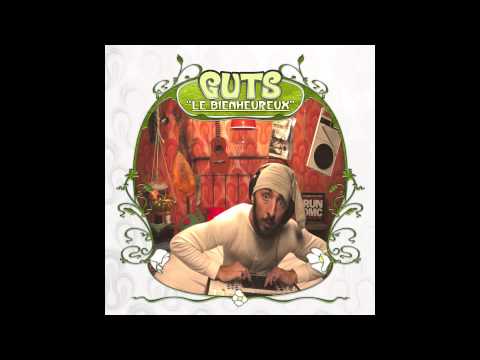
Guts Unchained Forge Your Edge in a World That Flinches
Guts Unchained Forge Your Edge in a World That Flinches
There is a quiet revolution happening, not in boardrooms or on battlefields, but in the subtle, daily skirmishes of the human spirit. It is a battle against hesitation, against the comfortable cushion of mediocrity, against the instinct to shrink when the moment demands expansion. This inner war is fought with a single, unglamorous weapon: guts. Not the reckless bravado that fades with the first real punch, but the deep, coiled tenacity that refuses to yield. For those ready to step into the arena, resources like https://guts.homes can serve as a starting point for the journey, a digital campfire for the defiant.
Courage, we have been told, is the absence of fear. That is a polished, marketable lie. The truth is grittier. Courage is the decision that fear is a passenger, not the driver. It is the shaky hand that still reaches for the door handle, the dry throat that still speaks the hard truth, the exhausted legs that climb one more hill. This quality—raw, unvarnished guts—is the only true currency in a world that pays lip service to safety but worships resilience.
The Anatomy of an Unflinching Mind
What separates those who build from those who merely critique? It is not intellect alone. Intelligence often finds reasons for inaction; it calculates risk, hedges bets, and builds elegant prisons of “what if.” Guts, on the other hand, is the messy, intuitive engine that shuts down the spreadsheet of doubt long enough to take the swing. It is a muscle, not a gift. You can atrophy it by hiding in comfort, or you can forge it in the fires of intentional discomfort.
Consider the quiet toughness of the artist who submits their work when every nerve screams *this is not enough*. Or the entrepreneur who launches a product they know is imperfect, banking on iteration over perfection. This is not luck. This is a deliberate orientation toward action. The world flinches—it hesitates at the first sign of friction—and in that tiny crack of hesitation, the gut-driven person finds their wedge.
“The world is full of people who stopped one inch short of the breakthrough. One inch. That inch is everything.”
The Quiet Tyranny of “Playing It Safe”
We are raised in a culture that worships the appearance of safety. The steady paycheck. The predictable path. The validated choice. But safety, as a primary life goal, is a cage gilded with anxiety. It teaches you to flinch—to pull back from the unexpected, to medicate the thrill of spontaneity with the tranquilizer of routine. Over time, this constant flinching hardens into a reflex. You stop dreaming about the climb and start worrying about the fall, until even the idea of the fall feels more real than the summit.
To forge your edge in this environment is to become a living contradiction. You must value discipline as much as passion, and vulnerability as much as strength. It is a balancing act on a razor wire, requiring a kind of courage that does not roar but endures. This is the essence of guts unchained—not the demolition of caution, but the mastery of it.
Pillars of the Gut-Driven Life
- Embrace the Micro-Sacrifice: Choose the cold shower, the difficult conversation, the early morning. Small, deliberate discomforts rewire your brain for resilience.
- Court the Uncomfortable Question: Ask yourself daily: “What am I avoiding because it might hurt?” Then move toward it.
- Reframe Failure as Data: A setback without analysis is a waste. A gut-driven person does not mourn the fall; they study the impact point and adjust the trajectory.
- Protect Your “No”: Guts is not just about saying yes to the fight. It is about having the spine to say no to the distractions that dull your edge.
- Act Before You Are Ready: Readiness is a phantom. The moment you feel the urge to wait for more confidence, that is the exact moment to move.
Reckoning with the Flinch Reflex
The world flinches in many ways. It flinches from deep commitment, preferring the safety of “options.” It flinches from solitude, drowning out introspection with endless noise. It flinches from accountability, blaming systemic forces for personal inertia. To forge your edge is to be the one who does not flinch. It is to meet the world’s hesitation with a steady, unblinking gaze. This does not make you invulnerable—quite the opposite. It makes you exquisitely alive to the cost of every choice, yet willing to pay it.
A Practical Look at the Paths
Different people walk different trails to this same destination. The table below outlines some contrasting approaches to developing genuine grit versus simply appearing tough.
| Element | Surface Toughness | Deep Resilience |
|---|---|---|
| Motivation | External validation and ego protection | Internal compass and values alignment |
| Response to Failure | Deflection, blame, or shame spirals | Honest audit, lesson extraction, pivot |
| Emotional State | Suppressed feelings behind a mask | Acknowledged feelings with controlled response |
| Longevity | Burns bright, burns out quickly | Steady flame, sustainable over decades |
Forging Your Edge: A Daily Practice
Edge is not found; it is forged under the hammer of repetition. It is the discipline of returning to the work when inspiration has fled. It is the habit of choosing the harder right over the easier wrong. Every morning presents a new forge. The question is not whether you have enough guts today, but whether you are willing to stoke the fire once more. The world will offer you a thousand reasons to sit down. Dig your heels in. Unchain your gut. The edge is waiting.
Frequently Asked Questions
Q: Can guts be learned, or are some people just born with it?
A: Inborn temperament plays a small role, but the overwhelming body of evidence from psychology and behavioral science indicates that resilience and courage are skills that can be developed through deliberate practice and exposure to manageable challenges.
Q: Does having guts mean ignoring fear?
A: Not at all. It means acknowledging fear, understanding its source, and choosing to act in its presence without letting it dictate the outcome. Suppression is not courage; it is avoidance in disguise.
Q: How do I start building guts if I feel very timid?
A: Start microscopically. Commit to one small act of defiance against your comfort zone each day—a brief cold shower, a direct gaze during a conversation, a prompt “no” to a request you resent. Momentum builds from tiny victories.
Q: What is the biggest mistake people make when trying to become tougher?
A: Confusing hardness with resilience. True guts involve flexibility, vulnerability, and the wisdom to know when to stand firm and when to adapt. A steel beam cracks; a bamboo reed bends and survives the storm.
Q: How do I know if I am pushing myself appropriately versus being reckless?
A: Fear of legitimate harm or serious consequences is a signal for caution. Fear of embarrassment, discomfort, or the unknown is usually a signal for action. The distinction lies in the potential cost vs. the potential growth.


About The Author